
Resin Injection Underpinning
Resin injection underpinning stabilises and lifts sinking foundations by injecting a geo-polyurethane resin into the ground beneath them. The resin expands, fills voids, compacts weak soil and raises the footing, all through holes a few centimetres wide. Urathane Solutions developed and patented its keyhole delivery system after more than 40 years of building and remediation work.
Book a free inspection · Call 1300 924 420
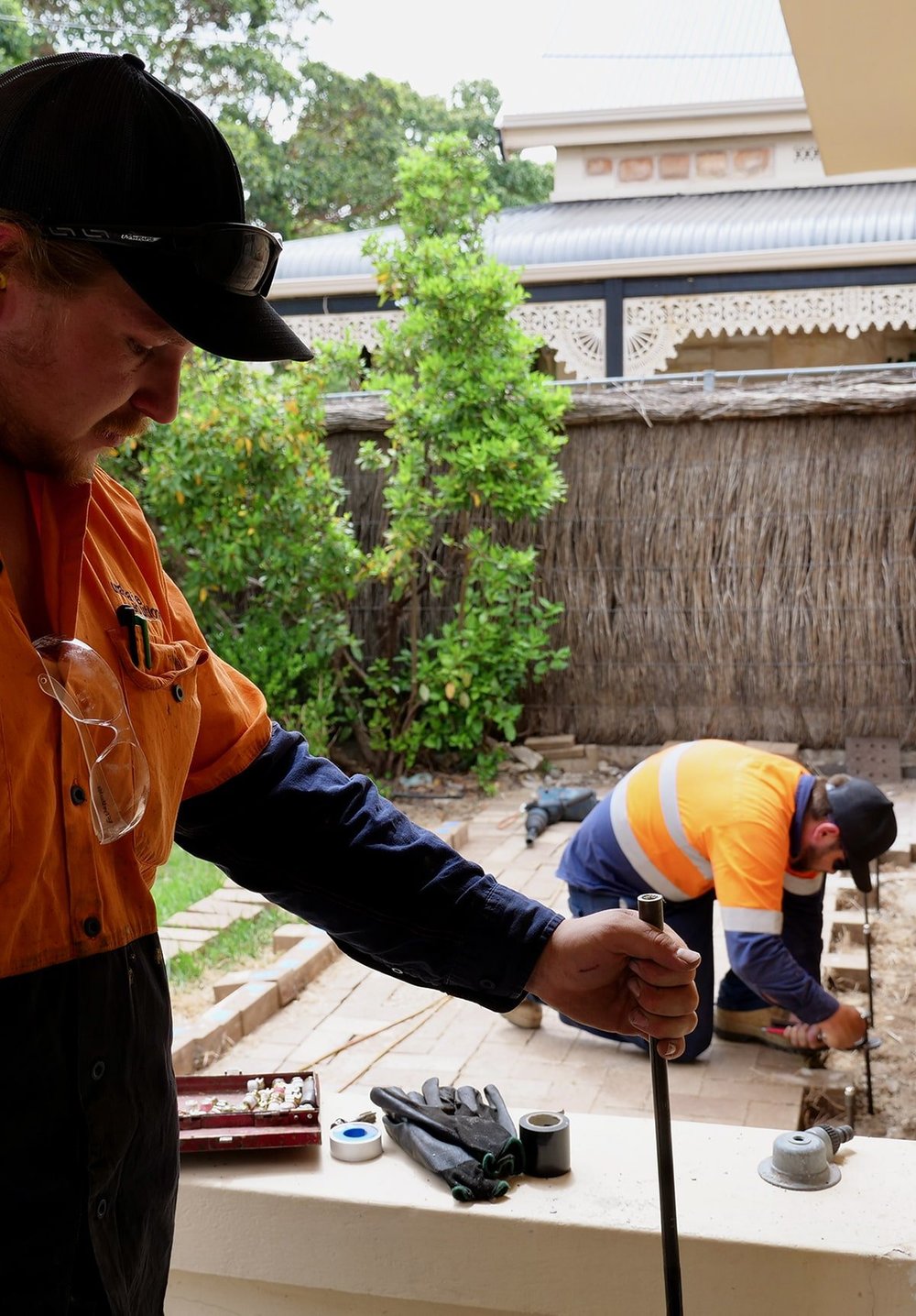
How it works
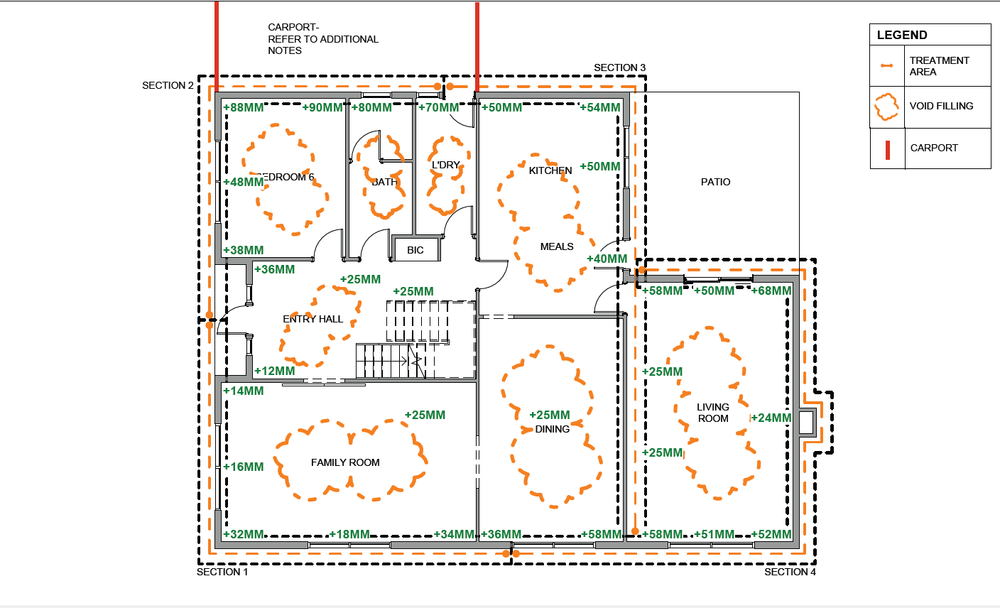
- Engineered layout. We map injection points and depths to suit the building and the soil. The Bunnings loading dock in Windsor Gardens, for example, used 95 points at about 1 metre deep.
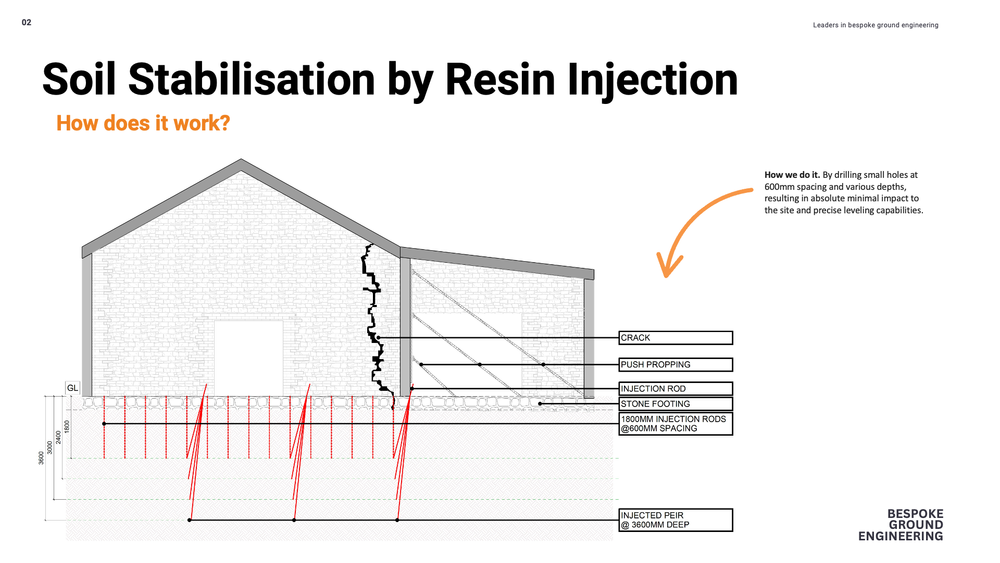
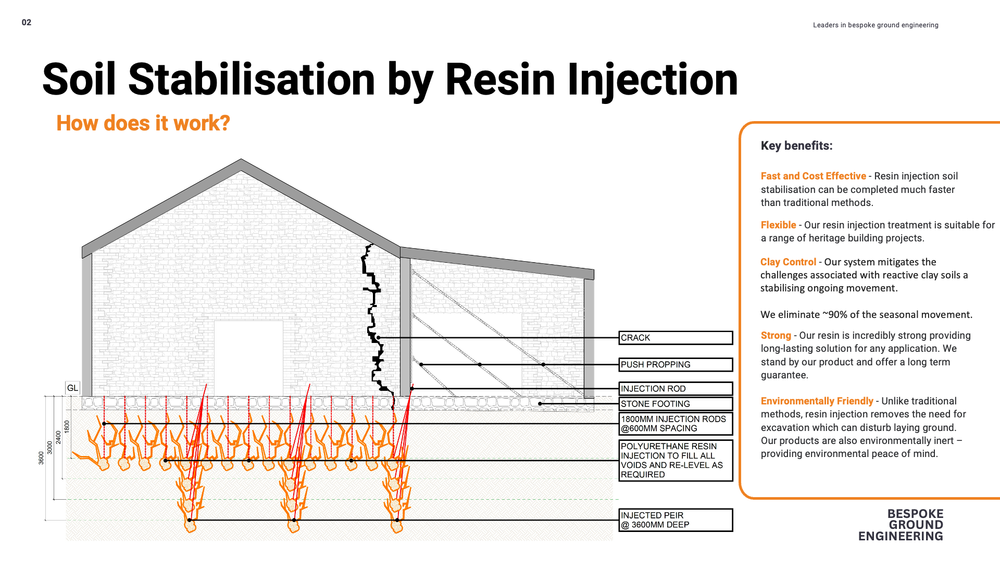
- Keyhole rods. Injection rods go in beneath the footing or slab, typically 1 to 2.4 metres deep, deeper where wet areas or pipework need extra care.
- Geo-customised resin. The resin is tailored to the soil type and its reactivity, groundwater movement and the load it needs to carry.
- Expansion and compaction. The resin expands to densify the soil and fill voids. Under load, it compacts the ground before it begins to lift.
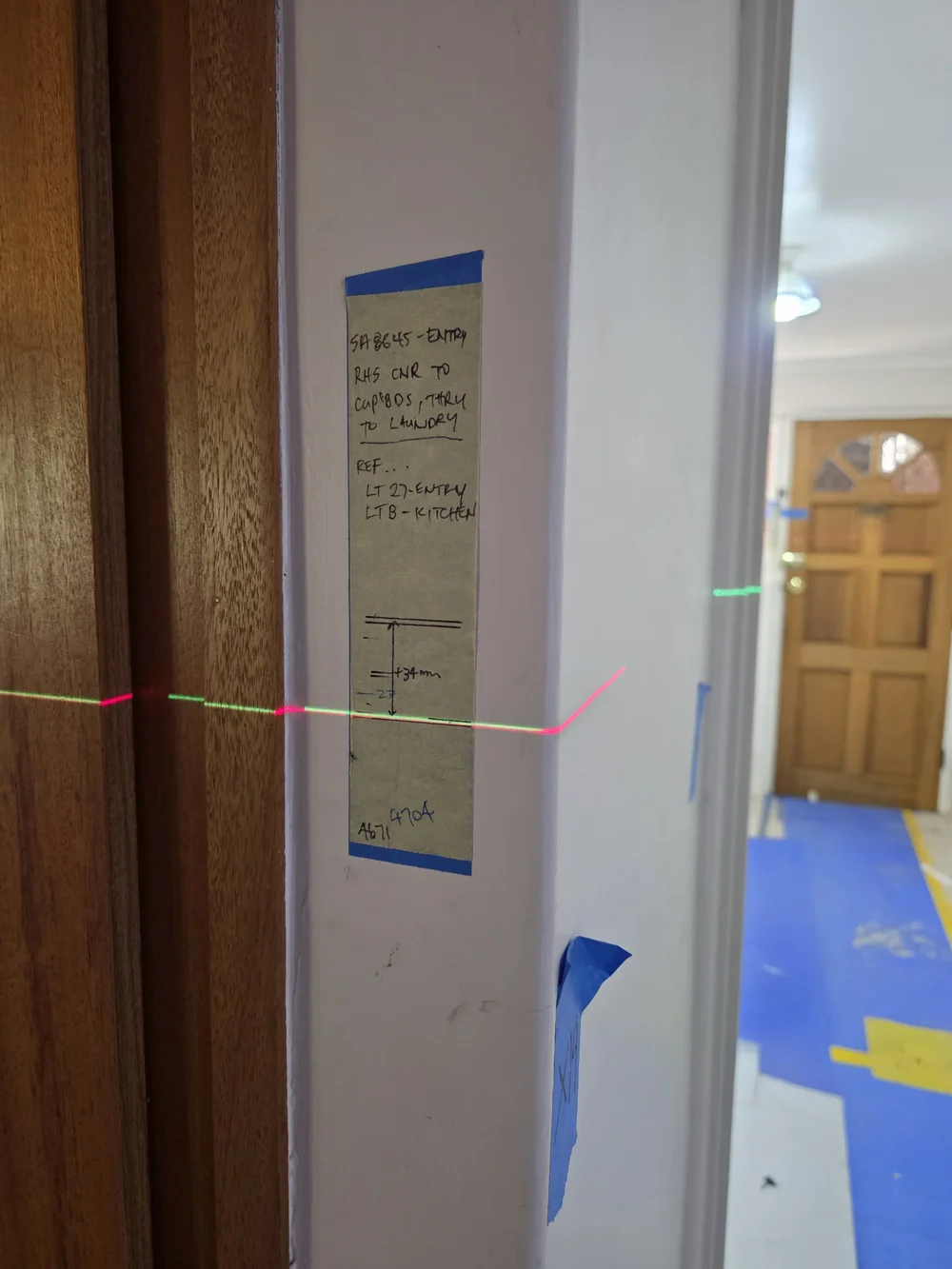
- Laser-controlled lift. Laser levels and wall indicators track movement in real time, so we can bring the structure back as close to level as possible.
Why choose resin over concrete underpinning?
- No excavation: no trenches under your footings and no jackhammers.
- Fast: most houses take days rather than weeks. Even our two-storey Bordertown project, with 386 injection rods, was completed in two weeks.
- Re-levels as well as stabilises: traditional concrete underpinning stops movement but rarely lifts.
- Lightweight and strong: lightweight, high-strength resin replaces heavy, water-reactive soil, and our system can lift up to 50 tonnes per square metre.
- Long-lasting: water resistant and non-degrading, backed by a 10-year guarantee.
See it on a heritage home


When resin injection isn't the right fix
If cracks are hairline and stable, or the damage is in render or plaster rather than the structure, you probably don't need underpinning. If a leaking pipe or poor drainage is the cause, that needs fixing first. We'll tell you straight.
Where we use it
Homes (brick, brick veneer, stone and slab-on-ground), heritage buildings, driveways and patios, warehouse floors, loading docks, roads, bridge approaches and industrial tanks. See underpinning in Adelaide, underpinning in Melbourne, commercial slab lifting and soil stabilisation.
Case studies
- Heritage stone footing stabilisation, St Peters SA
- Bunnings truck loading dock, Windsor Gardens SA
- Major slab subsidence remediation, Bordertown SA
FAQs
Is chemical underpinning the same as resin injection?+
Yes. "Chemical underpinning" is another name for injecting expanding polyurethane resin beneath footings.
How long does it last?+
The cured resin is water resistant and does not break down in soil. Our work carries a 10-year guarantee.
Can it fix a heritage stone house?+
Yes. In St Peters we stabilised and realigned the stone footings of an early-1900s building using staged resin injection and propping.
Talk to us about your property
Call 1300 924 420 or book a free inspection. Further reading: Why use expanding resin underpinning?