

Case Study
Location: Payneham Rd, St Peters
Project Type: Stone Footing Stabilisation and Realignment
Project Team: Urathane Solutions, South Australia
Project Overview
This project involved an early 1900s stone footing structure that had undergone prior modification for commercial use. Internal alterations included the addition of timber-framed and gyprock-lined partition walls.
Due to extended neglect, the building experienced severe structural degradation resulting from ongoing excessive wetting up and drying of reactive soil. The footing settlement caused the external walls to rotate out plumb from the top, allowing the ceilings to collapse . The instability posed a high risk of further failure, particularly to the roof structure.
Urathane Solutions was engaged to stabilise the foundation, arrest ongoing movement, and carefully realign the structure.
Key Challenges
During the 80’s or 90’s, the building had been rendered to cover up the cracking in the masonry, effectively locking the building in place.
Significant subsidence of original stone footings
Rotation of the external walls resulting from significant footing settlement
Risk of roof truss collapse during lifting operations
Degraded internal modifications (gyprock and timber framing)
Heritage structure requiring controlled, non-invasive techniques
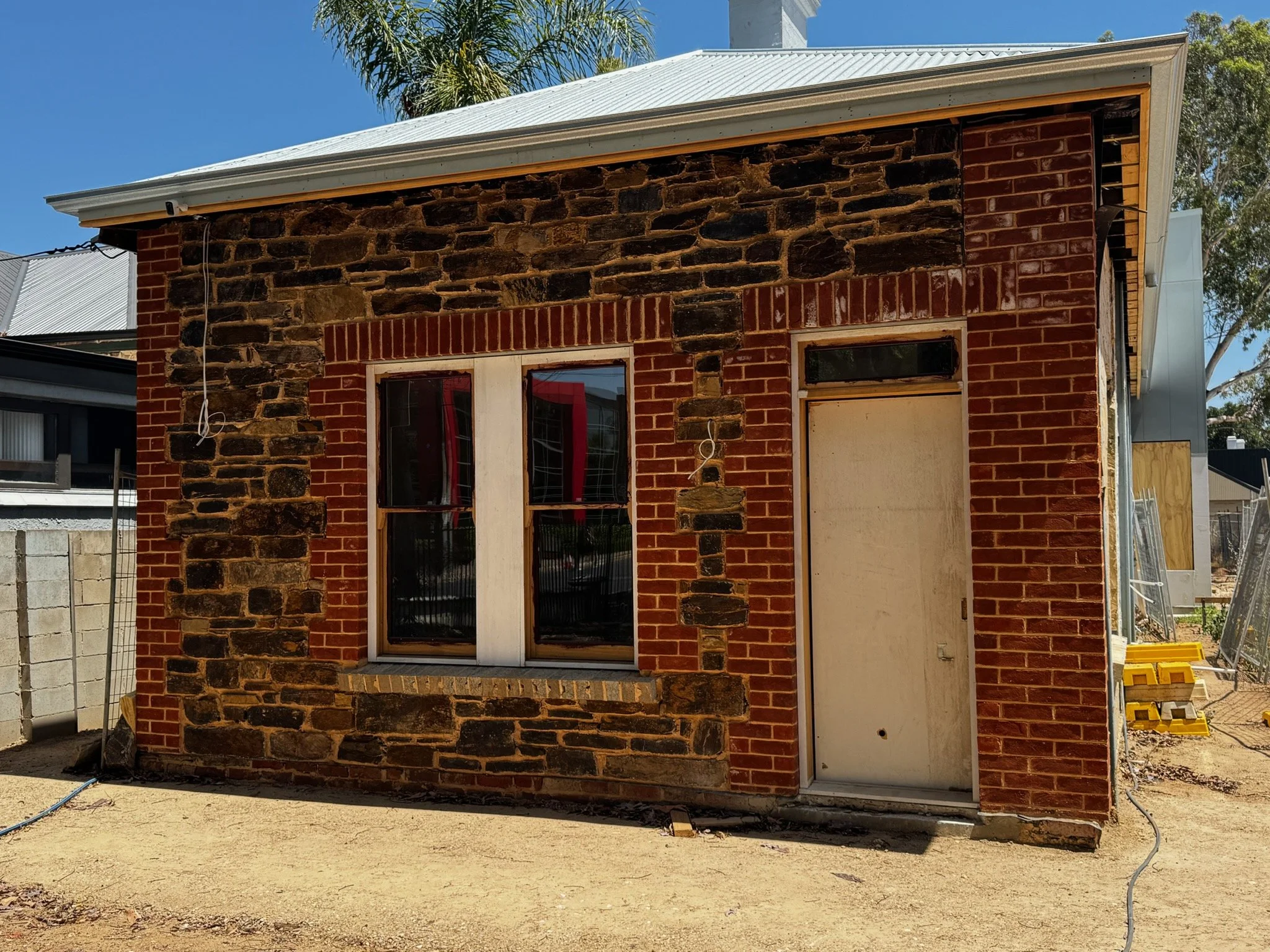
External view of structure post work
Scope of Works
Urathane Solutions carried out a detailed stabilisation and realignment program, including:
Full perimeter and internal footing resin injection to stabilise underlying soils
External push-pull propping to facilitate controlled structural rotation
Internal propping to support roof structure and ceilings during works
Controlled lift and re-alignment of subsided and rotated sections
Crack monitoring to track movement during correction
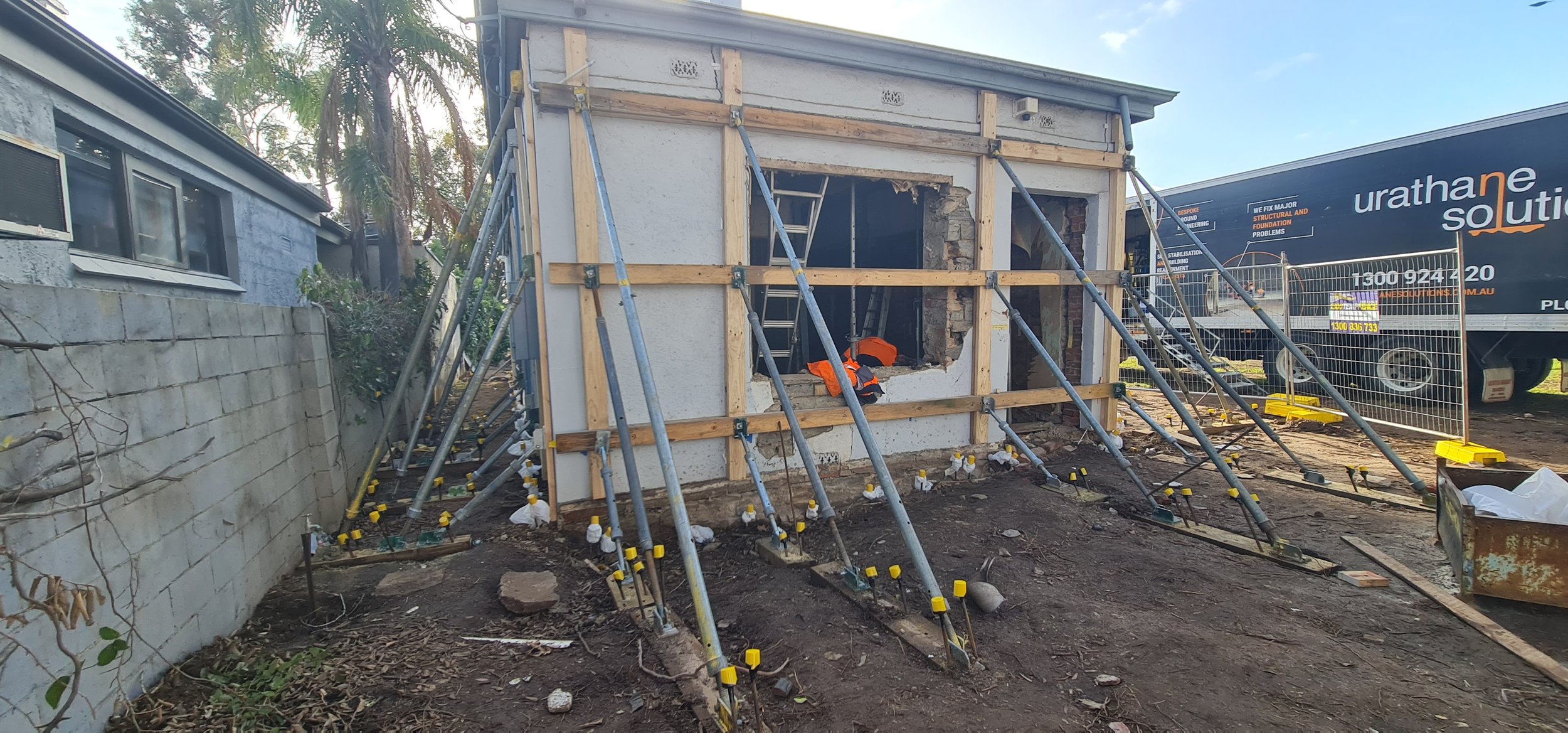
Pre work wall bracing in place
Execution & Delivery
The works required a highly controlled approach due to the fragile condition of the structure, the key factor being maintaining a continuous underpin.
A combination of external push-pull propping and staged resin injection allowed for gradual correction of the building’s rotation while maintaining stability. Internal propping ensured that roof loads were safely managed throughout the process.
During the lifting process, mortar repairs were required to be cut out and removed to allow the walls to rotate back towards plumb.
Careful sequencing of injections and adjustments enabled precise realignment without inducing additional stress or damage to the structure.
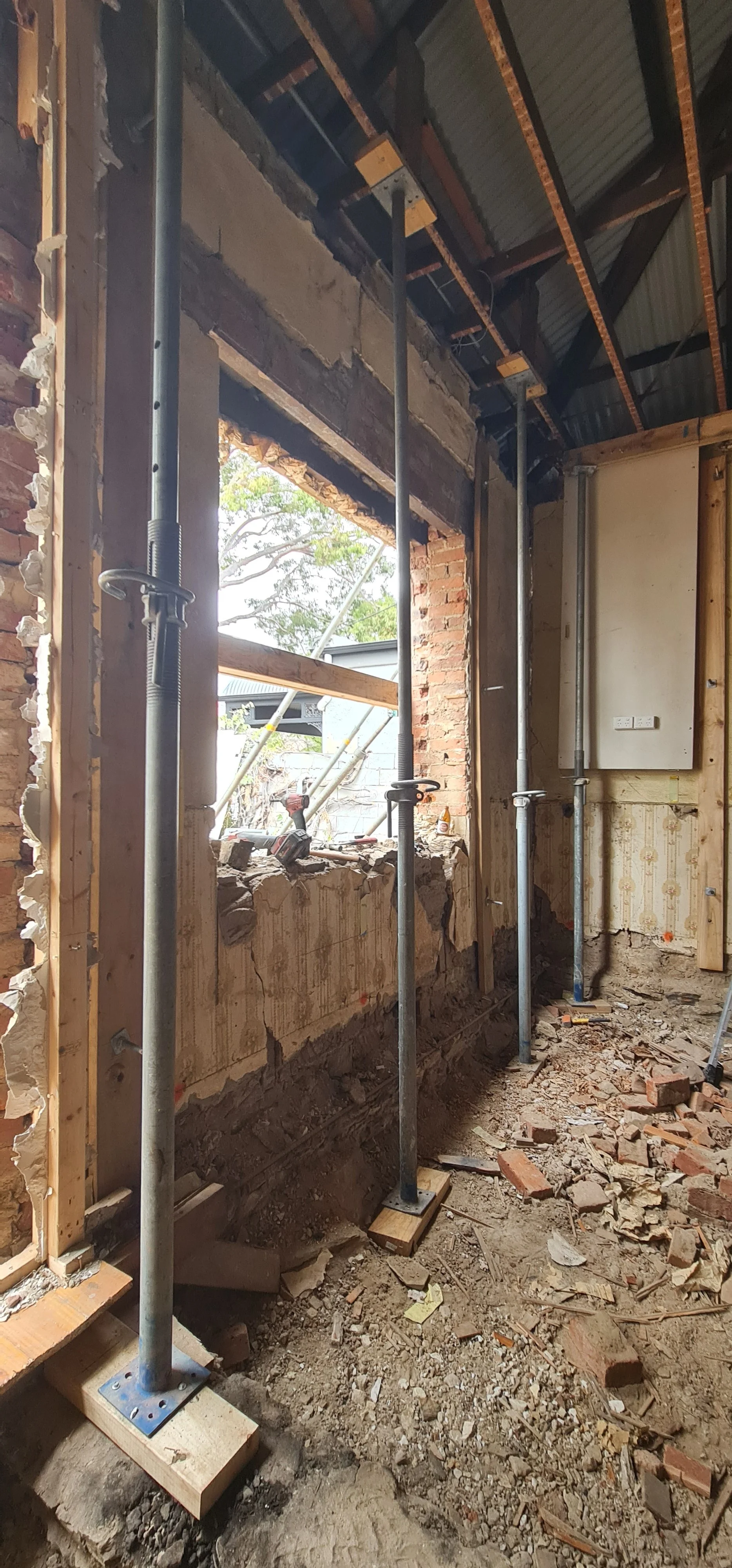
Roof prep for works completed
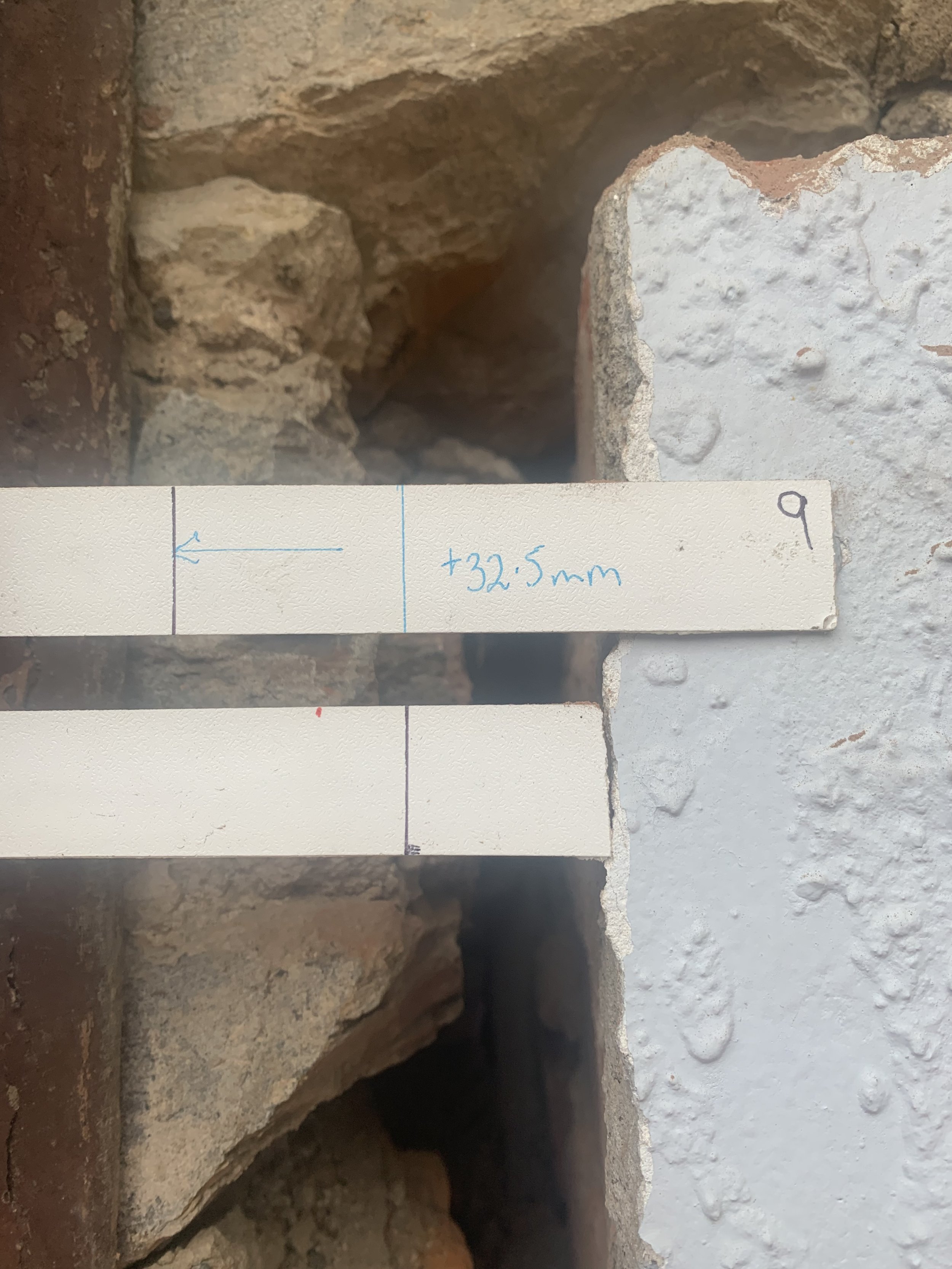
Indicators to track required movement.
Outcome
Structural rotation successfully corrected
Stone footings stabilised across entire footprint
Risk of roof collapse mitigated through controlled propping
Building restored to a stable and serviceable condition
Non-invasive solution preserved integrity of original structure
Site prepared for final landscaping and finishing works
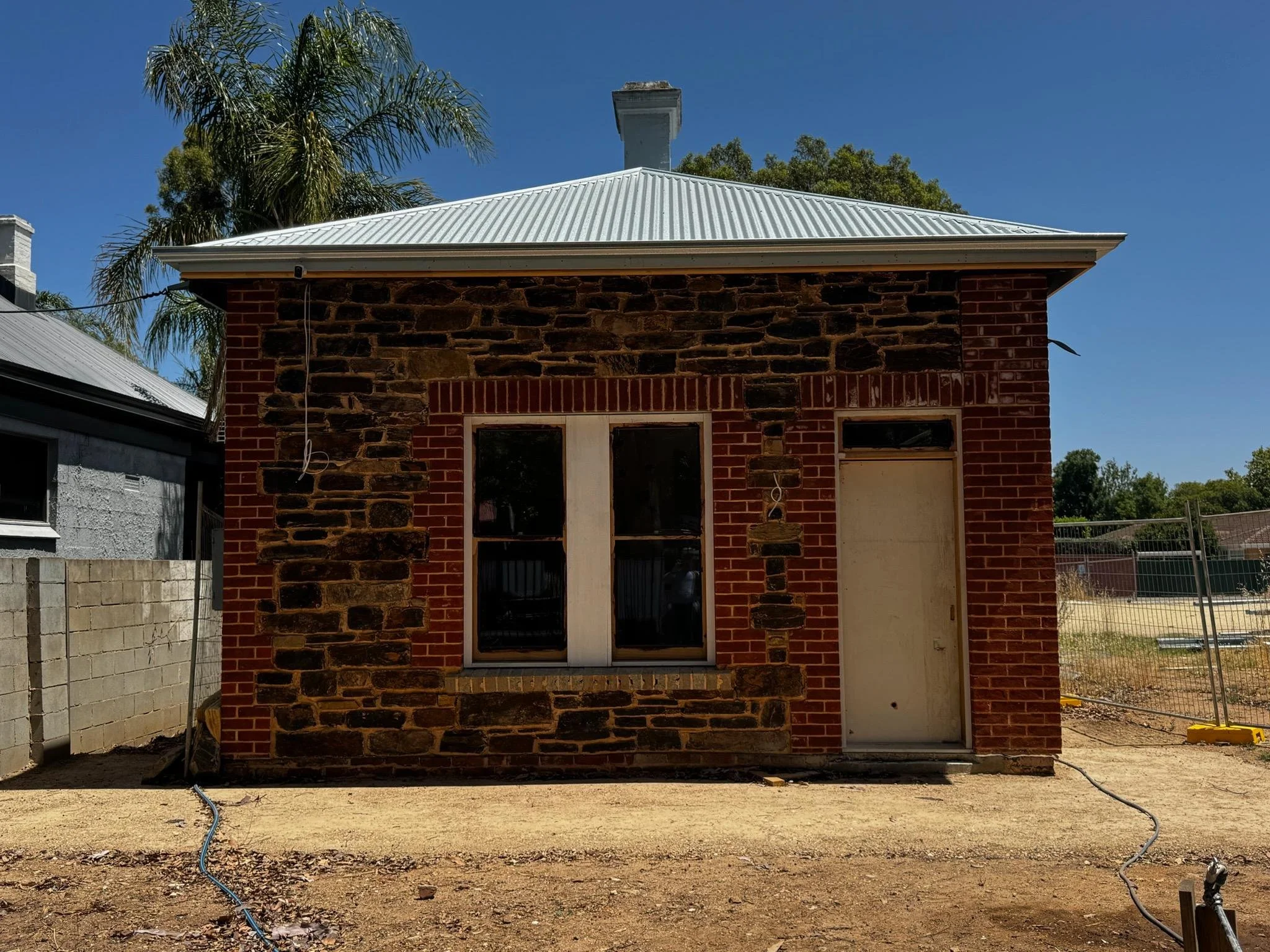
End result
Learn how resin injection underpinning stabilises heritage stone footings, or read more about our underpinning service in Adelaide.
Contact us to see how we can keep your asset structurally sound.